The outer layer
Getting GHK-Cu through skin
A promising response in a dish leaves another problem waiting at the surface: reaching the place where that response was measured.
The skin barrier
The review of topically applied GHK identifies poor passage through the stratum corneum, the outer skin barrier, as a central delivery challenge. It discusses palmitoylation and microneedle pretreatment among the strategies studied to improve penetration.
I think delivery is the most easily underestimated part of this subject. The name of an ingredient fits comfortably in a headline; the preparation carrying it tends to fall out. Yet the experiment begins with an actual preparation meeting an actual barrier.
The review’s attention to altered forms and pretreatment makes the problem concrete. Each change creates a preparation or condition worth examining on its own. The carrier and the skin setting deserve as much care as the peptide name, in my opinion. Otherwise, a reader can end up borrowing a result from a preparation quite unlike the one being discussed.
This page concerns delivery experiments. These delivery approaches are descriptions of research conditions, with no instruction to reproduce them.
Copper measured in excised skin
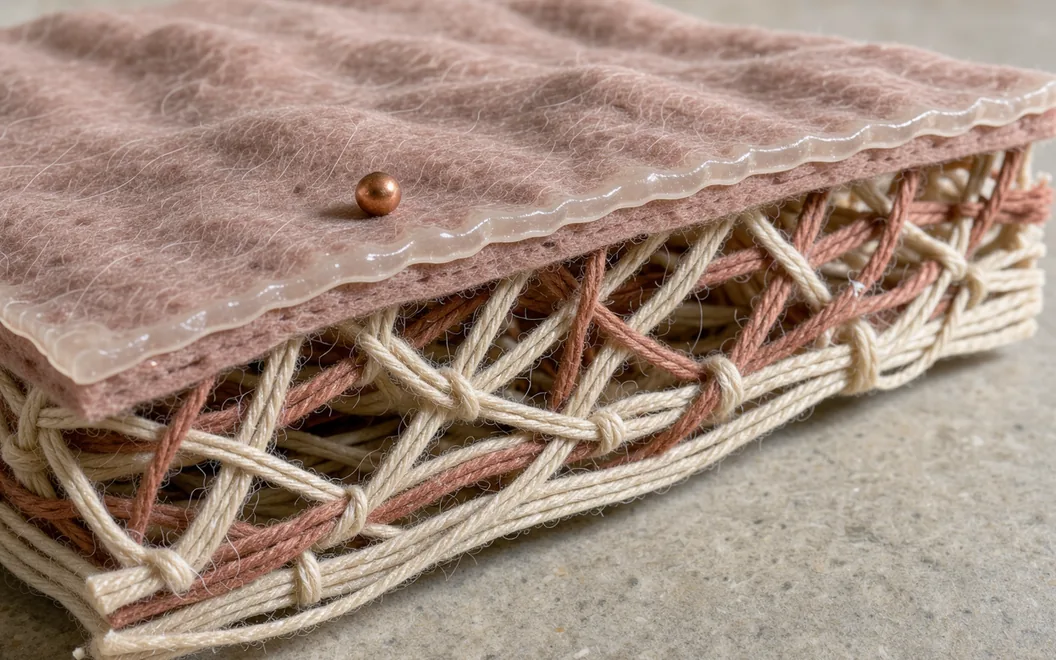
A human skin penetration experiment applied copper as a GHK-Cu tripeptide preparation and measured permeation and retention across skin layers. The work used skin outside the body. Copper crossed dermatomed skin, and some remained as a dermal depot.
The measured substance deserves emphasis: copper. A summary that names the measured substance as carefully as the peptide would earn more confidence from me. A statement about retained copper has its own value; a statement about the fate of intact GHK-Cu would need measurements suited to that question.
This is why the apparent tension between a difficult barrier and a penetration result interests me. The preparation, skin layer and measured substance give the experiment its meaning. Treating penetration as a simple yes-or-no property of the name loses the useful particulars.
I am encouraged that the question was measured at all. The next question I would pursue is how a particular topical formulation connects delivery to a visible outcome under the same study conditions. That connection would be stronger evidence than separate success stories joined together after the fact.
Delivery and visible outcomes
The topical GHK review examines delivery strategies alongside the anti-wrinkle literature. The skin-regeneration review reports topical improvements in skin laxity, clarity, fine lines, wrinkle depth and density. A review can bring those strands together; a formulation-specific trial would let them meet inside the same experiment.
I would be especially interested in a preparation whose delivery and visible effects were measured together. That is a preference for future work, rather than a result I am claiming for these papers. It follows from how strongly the carrier and the skin setting shape the delivery question.
The combination hair trial offers a related problem from another angle: what credit can be assigned to a peptide when the preparation contains something else as well?